
Archive note: This retrospective market briefing was added to the BNO Trading archive in August 2026. Its sources are limited to information available by the assigned article date.
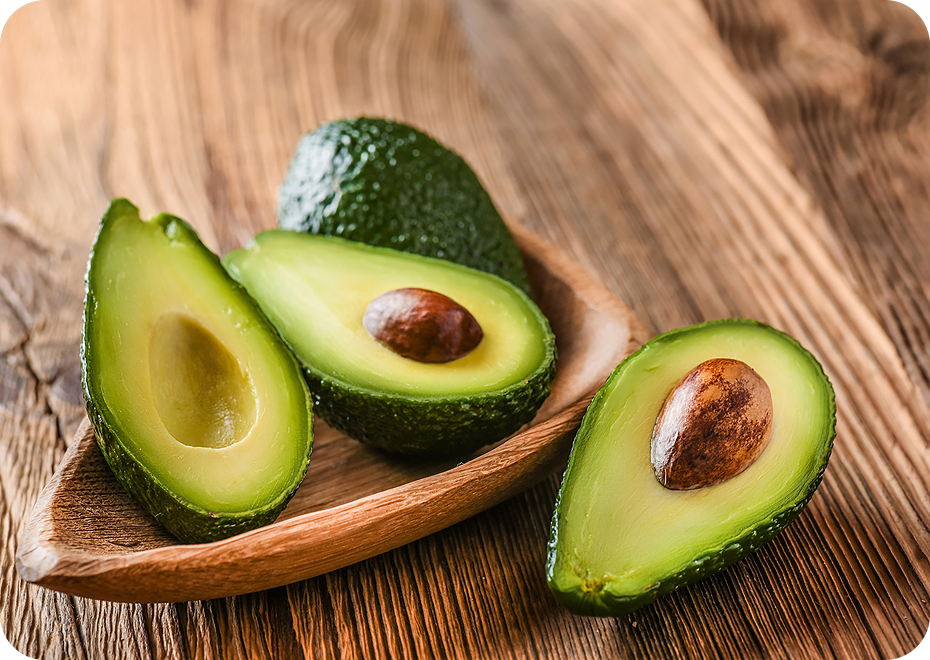
Kenya’s 2026 avocado harvest opened for sea-freight export consignments on 2 April 2026, according to Kenya’s Agriculture and Food Authority in an announcement relayed by the Kenya Export Promotion and Branding Agency. That date applies to sea shipments and to harvesting. It does not cover air freight, and says nothing about the fruit inside any given container.
That distinction costs money. An open season sets the earliest lawful harvest and loading date. It does not tell you whether a consignment was picked at the right maturity, handled correctly, inspected before shipment, or documented in a way you can audit if a claim arises. Buyers who read the opening as a green light on quality usually discover the difference when the container is opened at Jebel Ali.
Volume is not the constraint. USDA’s Foreign Agricultural Service attaché report on Kenya, published 6 April 2026, put 2025 production at 694,000 tonnes, revised up from 585,000 tonnes, and forecast 727,000 tonnes for 2026, up about 4.8 percent. Exports moved the other way: the same report revised 2025 exports down to 121,000 tonnes from 135,000 tonnes, citing Red Sea disruption and stricter Kenyan export rules, and forecast 130,000 tonnes for 2026. Production is growing faster than exportable, compliant supply.
Why Kenya’s Avocado Export Season Is Controlled
Kenya regulates when avocados may be harvested because immature fruit damages the reputation of the whole origin. Hass picked too early shrivels, softens unevenly, and arrives in a condition no retailer will accept. One season of early-picked fruit affects every exporter in the country, not only the one responsible.
The 2026 controls reflect that. Packhouse inspections began on 7 April 2026, five days after the sea-freight opening, and harvesting for avocado-oil processing is scheduled to open separately on 30 April 2026. The Agriculture and Food Authority also set an unambiguous penalty: handling immature fruit attracts immediate licence revocation.
The practical reading for a buyer is that fruit becomes physically available before the whole supply base is export-ready. Early-season consignments carry more maturity risk, and the longer the voyage, the less tolerance you have for fruit that was marginal at picking. The USDA attaché report noted that rerouting around the Cape of Good Hope “could nearly double transit times”, which turns a small maturity error into an arrival problem.
Packhouse Inspection and Supplier Traceability
The 2026 rules give buyers verifiable checkpoints. Exporters had to submit their lists of registered Horticultural Produce Marketing Agents and suppliers by 30 March 2026, and must apply for packhouse inspection at least three days before shipment. Both requirements create records, and records are what a B2B buyer can actually ask for.
Ask which registered supplier or agent the fruit comes from, and whether the packhouse inspection was applied for and cleared for your specific shipment. A counterparty who answers both quickly is operating inside the system. One who replies in generalities is asking you to accept unverified provenance.
Traceability matters commercially, not just ethically. If a consignment arrives with a defect pattern, traceability decides whether you can identify the harvest block, picking date and packhouse involved, or whether the investigation stops at the exporter’s front door. Ask for harvest records and shipment documentation as part of the order, not after a dispute begins.
Maturity, Grading and Ripening Performance
Maturity is the largest single determinant of how Kenyan Hass performs on arrival in the UAE. Immature fruit does not simply ripen late; it fails to ripen correctly at all, and no amount of ripening-room management at destination will recover it.
Agree the maturity standard with your supplier in writing and confirm how it is tested, who tests it, and at what point. Do not accept a verbal assurance that fruit is mature: ask what the test is, where the result is recorded, and whether that record travels with the consignment.
Grading deserves the same treatment. Size consistency affects retail presentation and foodservice portioning, external defects affect shelf appearance, and firmness at dispatch shapes what you receive. Set ripeness at dispatch and ripeness on arrival as separate points, because they are separate commercial questions.
The USDA attaché report was direct about the wider constraint, citing “ongoing structural challenges in post-harvest management, logistics, and the capacity for market absorption”, and describing processing growth as constrained by cold-chain limitations and compliance requirements. Those origin-side realities do not make Kenyan supply unattractive, but they do make supplier selection consequential.
Transport from Farm to Packhouse
The leg between orchard and packhouse is short, unglamorous, and responsible for a large share of the damage buyers see at destination. Kenya’s 2026 rules require harvested fruit to be handled and transported in crates. Open pick-ups and “Probox” transport are prohibited, with licence revocation as the penalty.
The reasoning is physical. Loose fruit in an open vehicle compresses under its own weight, bruises against the load bed, and sits in direct sun while the vehicle waits to load. That damage rarely shows at packing. It shows as internal discolouration and uneven softening after two or three weeks at sea.
Crated handling, covered transport, clean vehicles, short transfer times, and prompt initial cooling are the controllable variables, and asking about them reveals more than a specification sheet does.
What UAE Buyers Should Confirm Before Ordering
- Variety. Confirm Hass specifically, not a mixed or loosely described green-skin offer.
- Size count. Confirm the count per carton, not just “large”.
- Grade. Confirm the grade and the defect tolerances it carries in your contract.
- Pack format. Confirm carton type, single or double layer, tray or loose fill, and pallet configuration.
- Net carton weight. Confirm net weight in writing, since carton nomenclature varies between exporters.
- Harvest window. Confirm the picking dates covered, not only the shipping date.
- Expected transit time. Confirm the routing and transit estimate, and what happens if the routing changes.
- Ripeness on dispatch. Confirm the firmness condition the fruit will be in leaving the packhouse.
- Ripeness on arrival. Confirm separately what you expect at the discharge port and how it will be assessed.
- Inspection documentation. Confirm the packhouse inspection was applied for and cleared, and that paperwork travels with the shipment.
- Shelf-life expectations. Confirm the assumption for remaining life after arrival, and whether it assumes ripening at destination.
- Claim procedure. Confirm how a quality claim is raised, what evidence is required, within what period, and who inspects.
BNO Trading’s Role
BNO Trading is a Dubai-based B2B sourcing and commodity-trading business. We connect UAE and GCC buyers with suitable supply and work through the details that decide whether a shipment performs: variety, grade, size count, pack format, documentation and lead times. We do not own farms, packhouses or vessels, and we are not an inspection or certification body.
What we can do is have a specific conversation about a specific requirement. If you are building a Hass avocado supply programme for the 2026 Kenyan season, the useful starting point is your specification rather than a price indication. Buyers running mixed fresh-produce programmes often pair it with other East African lines such as passion fruit. Our sourcing and trading services and News and Insights archive explain how we work.
Planning Your 2026 Avocado Programme
Kenya’s 2026 season has more fruit behind it than 2025 and a tighter regulatory frame around how that fruit reaches a vessel. Neither removes the need to verify maturity, supplier registration, packhouse inspection and handling on every consignment.
If you are a UAE wholesaler, retailer, foodservice operator or distributor planning Hass avocado volumes this season, we can discuss specifications, grades, packaging formats, lead times and a quotation against your actual requirement.
Request a Hass Avocado Supply Quotation
Sources and Further Reading
- Agriculture and Food Authority (AFA) Opens Avocado Season for Kenya’s Exporters — Kenya Export Promotion and Branding Agency, 31 March 2026.
- Kenya: Avocado, GAIN report KE2026-0007 — USDA Foreign Agricultural Service, 6 April 2026.
 English